Sunday Morning, Cash Only: How to Buy Prints at a Car Boot Without Regretting It
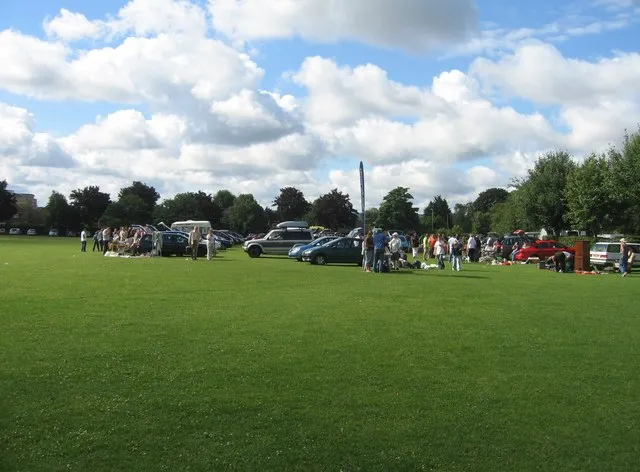
Photo: Sebastian Ballard, CC BY-SA 2.0, via Wikimedia Commons
The algorithm has had a good run. It knows what you like, serves it back in a tidy grid, and charges you a fair price for the privilege. But there is something the recommendation engine cannot replicate: the sight of a foxed old frame propped against a wheely bin at 7:40 on a Sunday morning, with a hand-written label reading “£4 the lot”.
That is the real appeal of buying prints at car boots, church halls and charity shops. Not just the price, though the price helps. It is the hunt. The early start, the damp grass, the slightly chaotic table where a 1970s exhibition poster is wedged between a bread maker and a box of Agatha Christie paperbacks. You cannot add that to a basket.
But a bargain is only a bargain if it ends up on your wall, not in the boot of your car for three years. So here is a practical field guide to spotting a print worth framing — and the ones that will quietly empty your wallet at the framers.
Go early, but not too early
The serious sellers are set up by seven. The serious buyers are already circling. If you arrive at nine, you will mostly be looking at the leftovers from someone else’s rummage. That said, the very first ten minutes can be a feeding frenzy, and prices are often at their firmest because the seller still believes everything on the table is a treasure.
A good compromise is to arrive as the second wave of sellers is unpacking. You get first look at their stock, and they are usually more open to a chat — and a deal — than the hardened traders who have been doing this since 1989.
Bring cash. A lot of stalls are card-friendly now, but not all, and a £5 note settles things faster than a discussion about signal. Bring a tape measure too, or at least know your wall dimensions by heart. Nothing kills a car-boot buzz like getting a print home and discovering it is two centimetres too wide for the only gap you had in mind.
Paper first, picture second
We all buy with our eyes. The image is what pulls you in, and that is fine. But before you hand over money, flip the print over and look at the back. It tells you more than the front ever will.
A thin, bright white backing with no texture and a glossy feel is usually a modern reproduction. That is not automatically a problem — plenty of decent open-edition prints are made that way — but it should affect what you pay. A heavier, slightly textured sheet with a bit of age to it, perhaps a little discolouration at the edges, is more promising.
Look for water stains, foxing (those small brown spots), and ripples. A slight wave in the paper can sometimes be flattened by a good framer. A tide mark across the middle of a landscape print is harder to forgive, and it will only get worse once it is sealed behind glass in a warm room.
And check the corners. Soft, rounded corners suggest the print has been handled a lot or stored badly. A crisp corner is a good sign, though not a guarantee.
Pencil marks are your friend
If you see a faint pencil squiggle in the bottom corner — something like “23/150” or a scribbled signature — that is an edition mark. It means the print was produced in a limited run, and it usually adds a little desirability. It does not mean you have found a lost masterpiece. It means someone, at some point, cared enough to number it.
The absence of an edition mark is not a red flag either. Posters, open-edition art prints and magazine pull-outs were never meant to be numbered. Just do not let a seller convince you that a faded reproduction of a Kandinsky is a “limited piece” because it has a number scribbled on the mount in biro.
Do the frame maths before you fall in love
This is the bit most of us skip, and it is the bit that matters most. A £6 print is not a £6 print if it needs a £70 bespoke frame. Suddenly your bargain is a commitment.
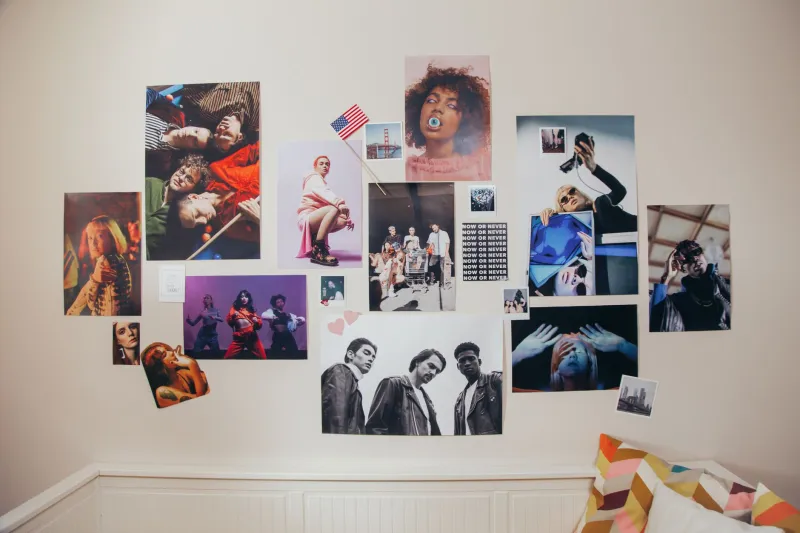
Standard sizes are your best friend. A3, A4, 30x40cm, 50x70cm — these can be framed off the shelf for £15 to £30, sometimes less if you are patient. An awkward size, an oval mount or a print with a huge white border will push you into custom framing, and that is where the costs climb quickly.
If the print is already framed, check the frame before you get excited. A solid wooden frame with glass can be worth more than the print inside it. A warped MDF frame with scratched perspex is probably heading for the tip, which means you are really just buying the sheet of paper. That is fine — just price it accordingly.
Damage you can live with, damage you cannot
A little age is charming. A slight yellowing to the paper, a few faint handling marks, a bit of character — these are part of the story. A print that looks like it has just come off a modern press but has been stored in a damp garage since the nineties is a different matter.
Walk away from anything with active mould, a strong musty smell, or water damage that has caused the paper to cockle. Mould spores do not stay put, and a framer will not thank you for bringing them into their workshop.
Tears are a judgement call. A small nick on the very edge, where it will be hidden by the mount, is survivable. A tear that runs into the image is a permanent scar, and no frame will hide it.
Talk to the seller
Not every car-boot seller knows what they are holding, and not every one is trying to pull a fast one. Ask where the print came from. Ask if they know anything about it. Sometimes you get a genuinely good story — a grandfather’s gallery habit, a house clearance, a box from a closed record shop. Sometimes you get a shrug. Both are useful information.
And if you are buying more than one, ask for a deal. A bundle price is part of the ritual. It is not rude to ask. It is practically expected.
The bit that matters
The point of all this is not to become an expert. It is to slow down. To pick something up because you like it, then check whether it will survive the journey home and the wall beyond. That is the opposite of the algorithm’s quick hit. It is a Sunday morning, a flask of tea, and a print that might just end up being the best thing in the room.
And if it turns out to be a dud? You spent four quid and got a story out of it. There are worse ways to start the week.