Your Walls Are Full. Now What? A Small-Flat Storage Plan for Print Lovers
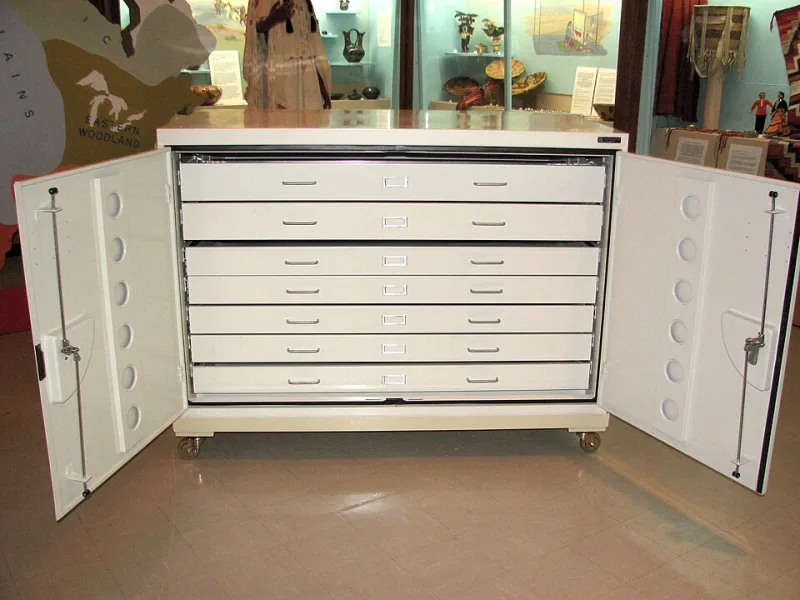
Photo: Myotus, CC0, via Wikimedia Commons
There is a moment in every print collection when the walls stop cooperating. You have filled the obvious spots, doubled up on the hallway, and started eyeing the side of the fridge. The next gig print or film poster arrives, and you realise the real issue is not taste. It is storage.
In a small UK flat, that problem shows up fast. Spare rooms are rare, lofts are either damp or full of someone else's suitcases, and the under-bed gap is already claimed by winter bedding. The good news is that prints are forgiving if you treat them properly. The bad news is that the hallway tube is not a long-term plan. It is a delay tactic with a cardboard lid.
First, admit the tube is not a shelf
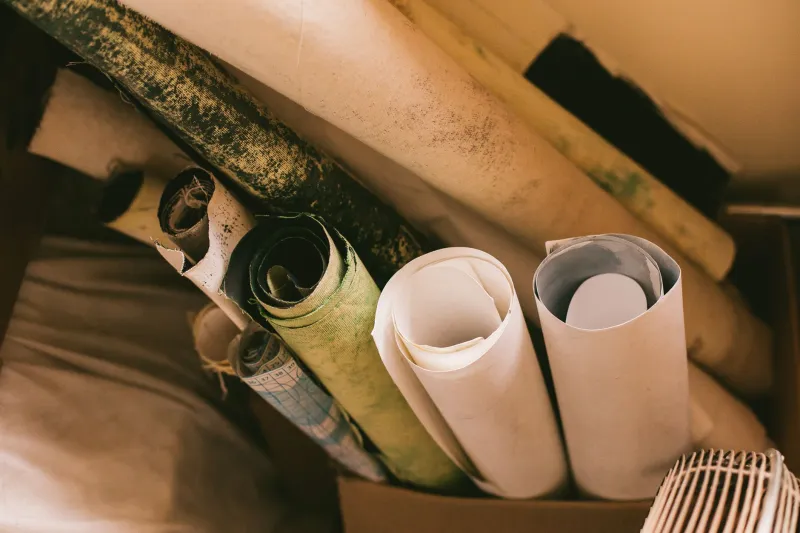
Cardboard tubes are brilliant for postage and terrible for storage. Left standing in a warm hallway, the paper inside can take on a curl that no amount of heavy books will fully fix. If the tube is near a radiator or a window, you are also inviting fade and brittleness. A print that spends six months in a tube is not being collected. It is being postponed.
The same goes for the stack behind the sofa. Paper likes stable temperature and low humidity, not the spot where the boiler pipe runs. If you would not store a paperback there, do not store a signed screen print there either.
The flat-file question, and the cheaper answer
Proper flat files are the gold standard for a reason. Shallow drawers, wide enough for A1, keep prints horizontal, supported and easy to flick through. They also cost more than most people expect, and they take up floor space that a small flat may not have.
A sensible middle ground is a rigid A1 portfolio case. The good ones have a zip, a sturdy board or corrugated shell, and acid-free sleeves or interleaving. They slot behind a wardrobe, under a bed or down the side of a sofa. They are not as elegant as a plan chest, but they do the main job: keep prints flat, dark and away from dust.
If you are storing a lot of unframed work, a shallow Really Useful Box or a similar plastic crate can work, provided you line it with acid-free board and keep the prints interleaved. Avoid bin bags, cardboard moving boxes that have seen a damp van, and anything that smells of compost. Paper absorbs smells as eagerly as it absorbs moisture.
Tissue paper is not glamorous, but it works
A sheet of acid-free tissue between prints is the cheapest insurance in collecting. It stops ink from offsetting onto the back of the next print, reduces surface scuffs and keeps textured paper from printing its pattern into whatever is pressed against it.
You do not need museum-grade materials for every piece, but you should avoid newspaper, kitchen roll and anything printed with coloured ink. Those can transfer marks over time. If a print came with a tissue sheet from the studio, keep it. If not, buy a pack of acid-free tissue and cut it to size. It takes ten minutes and saves a lot of regret.
Rotate like a gallery, not a hoarder
Storage is easier to live with when it is part of the display. Think in seasons rather than in permanent walls. In autumn and winter, bring out the warmer film prints, the moody gig posters, the ones with deep reds and low light. In spring, swap in brighter music art and lighter frames. The stored pieces go flat, interleaved and out of direct sun, not crammed into a cupboard where they will be forgotten.
This rotation habit also stops you buying more frames than you need. A small flat can happily support three or four framed prints per room if they are changed occasionally. The rest can live in the portfolio without feeling like a failure. Collecting is not the same as exhibiting everything at once.
Where not to store prints in a UK flat
Avoid the loft unless it is properly dry and insulated. Avoid the bottom of a wardrobe against an external wall, where condensation can gather. Avoid anywhere above a radiator, next to a kettle or in a bathroom with no extractor fan. Damp is the quiet enemy here, and UK flats have plenty of it.
If you are renting, keep storage light and movable. A portfolio case and a shallow box can go under a bed or behind a door without a single nail in the wall. That matters when the deposit is on the line.
A small-flat system that actually fits
Start with one A1 portfolio for the unframed keepers, one shallow box for frames and mounting bits, and a simple list on your phone of what is where. Keep the current rotation framed, the next rotation flat, and the tube empty. It is not a glamorous system, but it is a working one. In a small flat, that is the whole point.