Creases, Fade and Blu-Tack Gunk: A Realistic Rescue Plan for the Prints You Already Own
Photo: Unknown (commercial matchbox manufacturer), Public domain, via Wikimedia Commons
There's a particular kind of guilt that comes from owning a print you love and treating it like a shopping list. Rolled up, slightly crushed, Blu-Tacked at the corners, sitting above a radiator. We've all done it. The good news is that most of the damage on a typical UK wall is fixable at the kitchen table, and the fixes cost less than a takeaway.
This isn't about turning your spare room into a conservation studio. It's about triage: working out what's worth saving, what's worth framing, and what's worth leaving exactly as it is.
Start With Triage, Not Tape
Before you touch anything, take the print out of the light and look at it properly. Lay it flat on a clean surface and ask three questions: is the paper itself torn, is the image faded, and is the damage on the front or the back? Front-of-image damage is the one that matters. A scuffed reverse corner on a gig poster is basically a birthmark.
Check the paper stock, too. Thin magazine-style stock behaves very differently from a 250gsm screen print. If it feels flimsy and cockles when you hold it up, be gentler with every step below. If it's a heavier uncoated stock, you have more room to manoeuvre.
One useful test: hold the print at eye level under a normal room light and look along the surface, not at the image. Raking light is how you spot crease lines, ripple and the ghost of old tape.
The Flattening Protocol
Most rolled posters don't need anything clever. They need weight and time.
Unroll the print gently, image side up, on a clean floor or a large table. Don't force it flat — you'll just create new creases. Cover it with a sheet of acid-free tissue or, failing that, a clean cotton pillowcase. Then add books. Not one heavy book in the middle, which dents the paper, but a spread of medium-weight books across the whole surface. Leave it for at least 48 hours, ideally a week.
A trick that works well in damp British flats: do the flattening in the driest room you have, and avoid doing it right after a shower or during a rainy spell. Paper is a sponge. If you flatten a poster in a humid room, it will relax, then tighten as it dries and curl again.
If the poster is stubborn, roll it the opposite way, loosely, around a clean cardboard tube — image side out — and leave it for a day. Then flatten as above. Never iron a poster. We'll come back to that.
Crease Memory: What You Can and Can't Undo
A crease is a fold in the fibres. A light crease — the kind you get from a poster being rolled too tightly in a tube — will often relax with the weight method. A hard crease, white along the fold line, has broken the surface. That won't disappear. You can reduce how obvious it looks, but you can't unbreak paper.
For light creases, place the print between two sheets of clean blotting paper or unprinted newsprint and press under books for a week. For harder creases, a very low-heat iron on the reverse — no steam, a cloth between iron and paper, and constant movement — can help, but it's a risk. Test on a corner first, and if the paper is coated or glossy, don't do it at all.
Be honest with yourself: a small crease in the border of a £20 print is not a crisis. A crease across the face of a signed screen print is a different conversation.
Blu-Tack, Tape and the Residue Question
Blu-Tack is the great British wall crime. The residue it leaves is a greyish, slightly greasy mark that attracts dust and darkens over time.
Start gentle. Use a soft pencil eraser and rub very lightly along the edge of the residue — not the image. If that lifts some, keep going with a light touch. A cotton bud with a tiny amount of lighter fluid on plain uncoated paper can work, but test on a hidden corner first, and never on glossy or inkjet-printed surfaces. Warmth can also help: a hairdryer on cool-to-warm, held well back, softens old adhesive so you can lift it with a plastic scraper or your fingernail.
Selotape and masking tape are worse. Old tape goes yellow, then brown, then brittle. If the tape is on the front of the print, don't pull it. Take it to a framer and ask them to look. If it's on the back and the paper is sturdy, a little gentle heat and patience can lift it, but stop the moment the paper starts to fuzz.
Sun Fade Is the One That Doesn't Come Back
You can flatten, clean and press a poster back into shape. You cannot un-fade ink. If a print has been sitting in a south-facing window for two summers, the reds will have gone first, and no home remedy will restore them.
The practical move is prevention: rotate prints away from direct sun, use frames with UV-filtering glazing if the piece matters, and accept that a cheap print in a bright room will fade faster than a good one in a hallway. If a print is already faded, frame it as a period piece and stop worrying. A slightly sun-bleached film poster often looks better than a pristine one, because it looks like it lived somewhere.
When Damage Is the Point
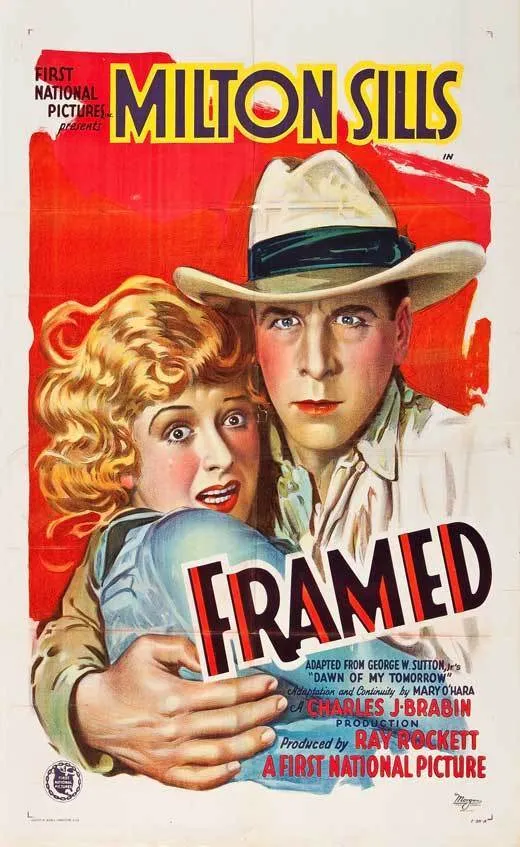
This is the bit most guides skip. On gig posters, tour prints and older film art, some damage adds character. Pinholes in the corners, a faint ring from a pint glass, a promoter's stamp on the back — these are provenance. A completely mint 1980s gig poster can feel oddly sterile. A slightly tatty one with a corner missing feels like it was actually there.
So don't restore the life out of a print. Fix what looks like neglect — curling, gunk, a tear that's getting worse — and leave what looks like history.
The Cheap Frame Test
Here's a simple rule: if the print cost less than the frame, frame it. If the print cost more than a decent frame, get a quote from a framer before you do anything irreversible.
A basic A3 or A2 frame from a high-street or online supplier, with an acid-free mount, will protect a print far better than tape and hope. The mount matters more than the frame — it keeps the artwork off the glazing and gives the paper room to move. For anything under about £60 in value, a cheap frame plus a mount is almost always the smarter spend. Above that, and especially for signed or limited pieces, paying a framer to hinge it properly is money well spent.
What Not to Try
Don't iron a glossy or coated print directly. Don't use bleach, vinegar or "gentle" household cleaners on paper. Don't tape a torn edge from the front. Don't leave a print pressed under books in a damp garage for a month and expect it to be fine. And don't hand a sentimental piece to a dry cleaner who "does posters on the side."
The posters already on your wall are probably in better shape than you think. Give them a weekend, some books and a bit of patience, and most of them will look like they were meant to be there all along.