Post a Print, Get a New Wall: The Quiet Rise of UK Poster Swapping
There’s a particular kind of wall envy that sets in when the print you want is sold out, the resale price has gone daft, and your own wall is still showing the same three things you bought in a hurry. The obvious answer is to buy something new. The better answer, increasingly, is to swap.
Poster trading has been ticking along in the UK for years, but in 2026 it feels less like a niche hobby and more like a sensible way to keep a music or film wall moving. People are swapping duplicates, trading up, trading down, and sending prints across the country in sturdy tubes for the price of a couple of pints. It’s part budget trick, part social club, and part gentle rebellion against the idea that a good wall has to be bought at full price.
Why swapping makes sense when the print you want has gone
Sold-out editions are the obvious trigger. You missed the gig print, the film release poster, the small-run screenprint that vanished in an afternoon. But the swap scene also works for quieter reasons: you’ve changed taste, you’ve got two copies of the same thing, or you’ve realised that an A2 monster doesn’t fit the corner you had in mind.
Trading isn’t the same as flipping. The best swaps are between people who actually want the print on a wall, not in a drawer. That keeps values sane and conversations pleasant. It also means you can often get something interesting for a print that has gone stale on you — a fair exchange rather than a race to the bottom on auction sites.
Where the swaps actually happen
The scene is more scattered than a single marketplace. You’ll find it in city-centre pub back rooms, at independent record shops with noticeboards, and at small poster fairs where someone has taped a “swap table” sign to a trestle. Online, it lives in Instagram stories, Discord servers, Facebook groups and the kind of group chats that start with a photo of a corner bump.
Postal swaps are the practical backbone. You agree a trade, pack the print, send it tracked, and wait. Local meet-ups are better for higher-value pieces because you can inspect condition in person and avoid the will-it-arrive-intact anxiety. Either way, the etiquette is the same: be clear, be quick, and don’t treat the other person like a vending machine.
The condition conversation
Most swap friction comes from a fuzzy description. “Good condition” means different things to different people. One person means “no major tears”; another means “has been on a wall for four years and has faded in the sun”. Before you trade, ask for photos in raking light — a lamp held at a low angle will show creases, scuffs and ripples that a straight-on phone snap hides.
Check the corners, the edges and the surface. Ask about the back, too: tape, pin holes, previous mounting, water marks. If it’s an editioned print, confirm the number and signature. If it’s a reproduction, say so. A short video panning across the print is often more useful than five glossy photos.
A simple grading habit helps: mint, near mint, very good, good, fair. Then describe the flaws. “Very good, one soft corner and a faint handling mark bottom right” is worth more than a hopeful “excellent”. Honesty now saves an awkward message later.
Packing that survives the post
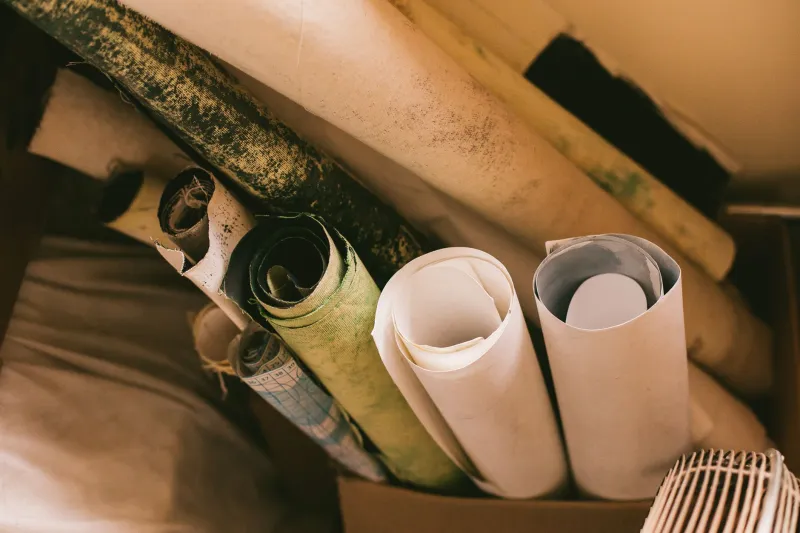
Rolled prints should travel in a rigid tube, not a flimsy cardboard one that bends in the van. Roll the print loosely around a clean inner tube or roll it in acid-free tissue first, then kraft paper, then bubble wrap. Use end caps and tape them securely. Don’t tape the print itself. Don’t roll it so tight that it takes a week to relax.
Flat prints need two rigid boards, corner protectors, a waterproof bag and a rigid envelope. If the print is valuable, send it tracked and consider insurance. Keep proof of postage and share the tracking number. A quick photo of the packed parcel before it goes is not paranoia; it’s just good manners when money or a favourite print is in transit.
And please: don’t reuse a tube that’s already been crushed once. The postal system has a sense of humour.
Fair rules and polite noes
Agree the trade in writing — even if it’s just a message thread. State what’s being swapped, the condition, who pays postage, and when each person will send. For higher-value prints, use tracked and signed services. If one print is worth noticeably more, say so and adjust with a bundle, a top-up or a straight no. “No thanks, I’ll hold out for a straight swap” is a complete sentence.
Red flags are familiar: pressure to send first, stock photos instead of real ones, vague edition details, no photo of the back, and a sudden story about a previous parcel going missing. Meet in public for in-person swaps, and don’t hand over a print without checking it properly. Most traders are lovely. The odd chancer is why you check.
Start with one duplicate
The easiest way in is to find one print you’re genuinely done with — a duplicate, a size mistake, a poster that no longer fits the room. Photograph it honestly, write a clear description, and post it in one group or take it to one local meet-up. You don’t need a spreadsheets-and-lanyards operation. You need a tube, some tape and a bit of patience.
A refreshed wall doesn’t always need a fresh checkout. Sometimes it needs a parcel landing on the doormat, a fair trade, and a print that finally suits the space.