Other People’s Walls: How to Give a Print They’ll Actually Hang
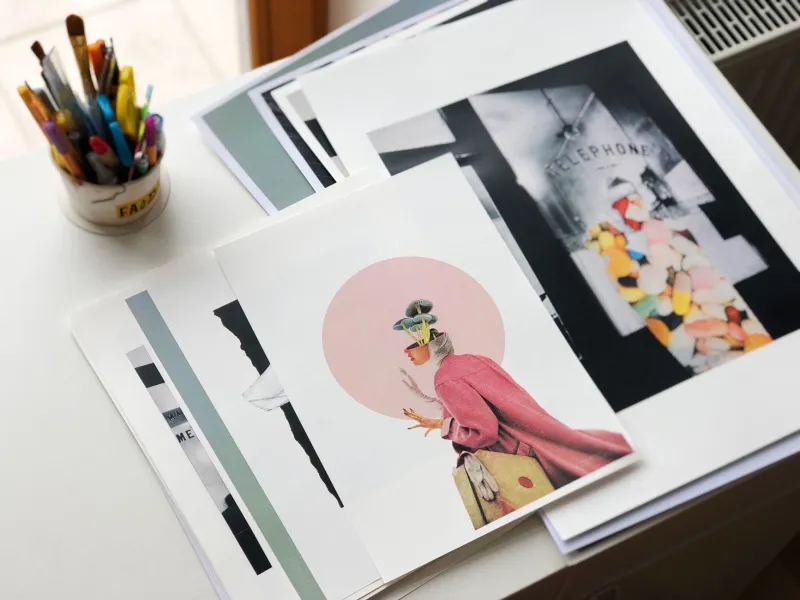
Buying art for someone else is a bit like buying them a haircut: the intention is lovely, but the execution can go badly wrong. A print is personal. It ends up in someone’s home, doing a job every day, and if it misses the mark it does not get quietly returned to a drawer — it gets hung in the hallway out of politeness. That is why the £25 print gift needs a bit more thought than a novelty mug, and rather less guesswork than a framed gallery piece.
The good news is that £25 is a genuinely useful budget in 2026. It is enough to buy a small-run design from an emerging illustrator, a decent sheet of paper, and a simple off-the-shelf frame if you plan properly. It is not enough to buy someone else’s exact taste. So don’t try. The trick is to buy a print that gives the recipient room to make it theirs.
Start with the wall, not the personality quiz
When people say they do not know what art to buy for someone, they usually mean they do not know their friend’s favourite film, band or colour palette well enough to commit. Fair enough. But you probably know one useful thing: the shape of the space. Is there a narrow slice of wall beside a desk? A big blank rectangle above a sofa? A rented flat where nails are banned and shelves are doing all the work?
That is where to begin. A small A4 print is a safe gift for a crowded flat, a desk shelf or a hallway that needs a bit of punctuation. An A3 gives you more presence without demanding a whole gallery wall. If the person is a committed print collector, they will already have strong opinions and probably a spare frame; if they are not, smaller is friendlier. Nobody has ever sighed with relief at being given a poster that requires them to rearrange the living room.
Also consider the room’s job. A kitchen wall can take something brighter and more graphic. A bedroom tends to reward calmer colours and simpler shapes. A studio or home office is where slightly stranger, more specific designs earn their keep. You are not decorating their house for them. You are offering one good object that can sit alongside whatever is already there.
The £25 sweet spot — and when to break it
In the UK right now, £25 can buy you a well-printed A4 from a small studio, a simple A3 from an emerging designer, or a nicely made A4 with a bit of texture and a limited run. That is the sweet spot: affordable enough to feel generous, special enough not to feel like a freebie from a conference bag.
If you spend much less, you are often paying for a mass-produced image on thin paper. That can still work, but it rarely feels thoughtful. If you spend much more, you start buying into the artist’s reputation rather than the recipient’s wall, and the gift becomes harder to receive casually. The point is not to impress them with the price. It is to hand over something that looks considered.
One practical exception: if you are buying for a household rather than one person, or for someone who has just moved and has genuinely empty walls, £30–£40 can get you a larger A3 or a two-print set. But keep the frame budget separate. A £25 print in a £10 frame looks intentional. A £40 print with no frame and no plan looks like homework.
Paper, size and the finish that survives real life
For a gift, look for matte or softly textured paper rather than high-gloss stock. Gloss can look cheap under ordinary ceiling lights, and it is a nightmare to photograph or hang opposite a window. A 250–300gsm matte paper feels substantial in the hand, which matters when someone opens the tube. Giclée printing is a useful phrase to look for, but it is not a guarantee of taste; it just tells you the print should hold its colour reasonably well.
Check the size before you fall in love with the design. A4 is the easiest gift: cheap to frame, easy to post, and small enough to fit almost anywhere. A3 is the better choice if you know the recipient has a specific empty wall and a bit of confidence with hanging. Square formats can be lovely but are a pain to frame cheaply. Panoramic prints are stylish and almost always require a custom frame, which rather ruins the £25 plan.
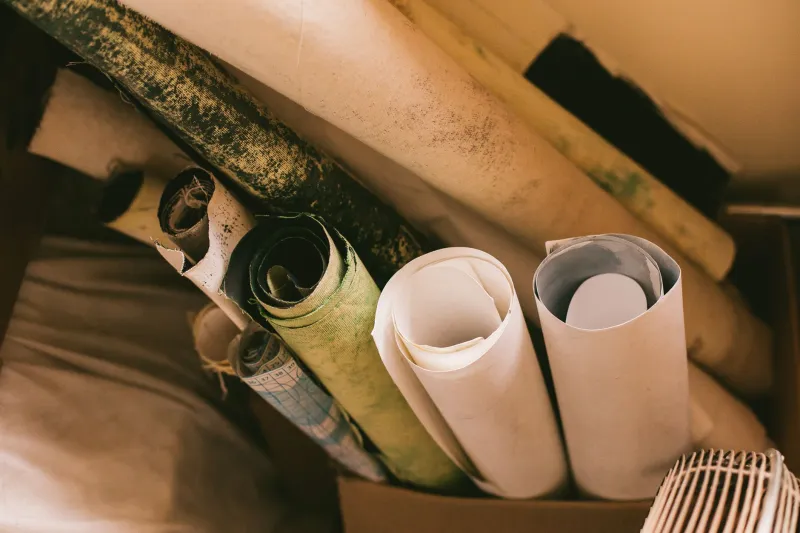
If the print is a gift, ask the seller whether it ships rolled or flat. Flat is better for A4 and small A3 prints because it arrives ready to frame. Tubes are fine for larger pieces, but they put the work on the recipient: unrolling, flattening, weighing down with books for a few days. That is not a disaster, but it is not quite the instant pleasure of a gift, either.
Delivery is part of the present
A print that arrives creased on 23 December is not a thoughtful gift; it is a cautionary tale. In the UK, use a seller who offers tracked delivery and states clearly whether the print is rolled in a sturdy tube or sent flat in rigid board. Royal Mail Tracked 24 or 48 is fine for most small prints; for anything fragile or time-sensitive, pay the bit extra and avoid the festive scramble.
Order early. As of November 2026, the sensible move is to buy before the December rush rather than treating a small studio like a next-day retailer. Many independent print sellers are one-person operations. If you are buying from an emerging designer, check their dispatch times and leave room for weather, strikes or the general chaos of the season. A gift that arrives on time but looks rushed is still a rushed gift.
Let the frame do the heavy lifting
A simple off-the-shelf frame is the difference between “poster” and “present”. You do not need bespoke framing for a £25 print. An A3 frame with a wide mount can make a modest design look far more expensive, and a plain black or natural wood frame suits almost any wall. High-street options are perfectly fine; just check the internal dimensions, not the external ones. A frame sold as A3 should fit an A3 print, but some are designed with a mount that reduces the opening to A4.
If you are gifting the frame too, leave the print in its packaging and tape the receipt to the back. If you are not, say so clearly. “I left the frame to you” is a helpful note; “I assumed you had a frame” is an accusation. A small card explaining why you chose the design — the colours, the band, the weird little detail — does more work than expensive paper ever will.
A five-minute gut check before you pay
Ask yourself: would I be happy to see this on their wall, even if it is not what I would choose? Does it work in the room I have in mind? Is the size realistic for a cheap frame? Will it arrive flat, tracked and before the day? If the answer is yes to all four, you have probably found the sweet spot.
The best £25 print gift is not the one that guesses someone’s entire personality. It is the one that says: I noticed your wall, I thought about your space, and I picked something with a bit of character. That is the Zip! Posters version of gifting — not louder, not dearer, just a small piece of print culture that lands in the right place.