The Reprint Detective: Reading Paper, Print and Red Flags Before You Buy Film Art

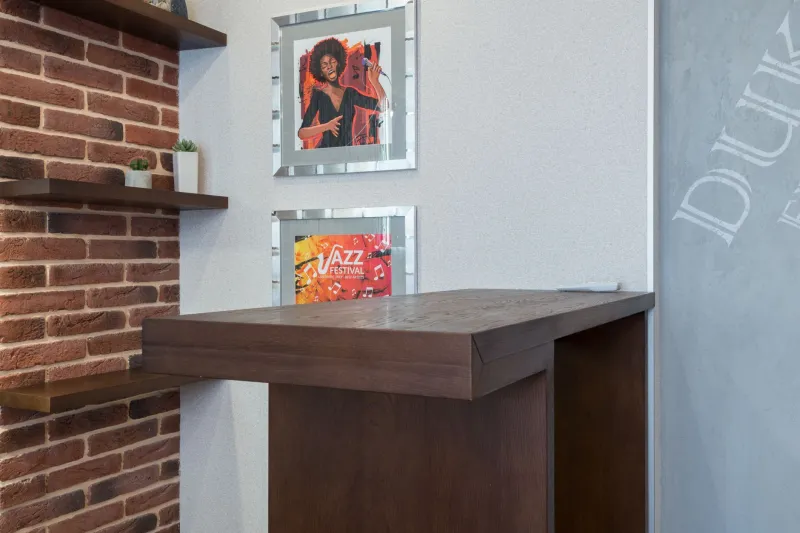
Photo: Giles Laurent, CC BY-SA 4.0, via Wikimedia Commons
Reprints are the sensible way to build a film wall without remortgaging the flat. Originals are lovely, but a good reprint lets you live with a favourite image, rotate it when your taste shifts, and still afford a frame. The trouble is that the word 'reprint' covers everything from a studio-licensed restoration to a dodgy scan printed on photo paper and sold as collectible. In 2026, the market is busy enough that you need a detective's eye.
Why Film Reprints Are Having a Moment
Cinema art has moved out of the fan corner and onto the living-room wall. Quads, double crowns, Japanese B2s and minimalist alternative designs all sit happily next to a sofa or a record shelf. Reprints make that possible. They also make it easy to buy badly. A film wall should feel considered, not like you've cleared out an eBay seller's spare room.
Paper Weight: The First Handshake
A decent reprint feels like paper, not printer paper. Ask the seller for the stock weight. Anything around 170–250gsm is a reasonable starting point; heavier stock can feel more substantial, but weight alone isn't a guarantee of quality. Too light and the print will curl, ripple or look flimsy behind glass. Too glossy and every lamp in the room will bounce off it.
Matte or satin finishes tend to look more like cinema paper. High-gloss photo stock can work for a bright, modern image, but it often reads cheap under domestic lighting. If a listing doesn't mention paper at all, assume it's the cheapest option until proven otherwise.
Colour Depth and the Curse of the Over-Saturated Sky
Compare the reprint to a known original image. Does the sky look radioactive? Are skin tones orange? Have the blacks crushed into one flat blob? A good reprint holds detail in the shadows and doesn't blow out the highlights. Bootlegs often crank up the saturation to make a listing pop on a phone screen, but on a wall it looks like a poster of a poster.
Zoom in. Check gradients, skin, fabric textures and dark corners. If the image is soft at A3, it will be mush at 50 x 70cm. A little grain is fine; a lot of blur is not.
Typography Tells
The credit block is where careless reprints fall apart. That tiny text at the bottom—director, cast, studio, year—should be crisp, not mushy. Check the billing order, the spelling of names and the spacing between letters. Fonts should belong to the era of the film, not whatever was default on a laptop.
Look for missing accents, stray capital letters and credits that sit too close to the edge. If the seller shows only a mockup with the credit block cropped out, ask for a close-up. A legitimate reprint should survive a magnifying glass.
Licensed, Bootleg or Somewhere in Between
A licensed reprint is authorised by the rights holder. It may be produced from original digital files and sold by a reputable shop or distributor. A bootleg is usually scanned from an existing poster, cleaned up and printed without permission. Some sellers offer original fan art inspired by a film, which is a different thing entirely—fine if it's described honestly.
Ask direct questions. Who licensed it? Is there a copyright line? Is it sold as a reproduction, a professional print or a collectible? If the seller dodges the source question, treat that as an answer. 'Limited edition' means nothing unless it's numbered and the edition size is stated.
Sizing: The Measurements That Don't Add Up
UK cinema quads are 40 x 30 inches, double crowns are 30 x 20 inches, and US one-sheets are 27 x 40 inches. A2 is 42 x 59.4cm. Plenty of reprints come in odd sizes, which is fine if you know about it before you buy. The problem is vague listings: 'A2' when the image is cropped, 'approx 50 x 70' when it's actually 48 x 68, or a poster that arrives a centimetre too wide for the frame you bought.
Ask for exact dimensions in both centimetres and inches. Measure the wall space first, then the frame. Standard frames only fit standard sizes, and a custom mount costs more than a cheap print.
Framing Without Remortgaging
Off-the-shelf frames for A2 and A3 are your friend. For odd sizes, a cut mount can make a print fit a standard frame and add a bit of gallery calm. Acrylic glazing is lighter and cheaper than glass on large frames, though it scratches more easily. Don't dry-mount anything you might want to sell or swap; for a cheap reprint it's tempting, but it's permanent.
Keep prints out of direct sunlight. Even a decent reprint will fade, and a faded film poster is a small tragedy. If you're rotating prints, a simple poster hanger or clip frame is less faff than a full framing job every time.
The Zip! Reprint Checklist
- Ask for paper weight and finish.
- Compare the image to a known original.
- Zoom in on the credit block.
- Confirm exact dimensions in cm and inches.
- Ask whether it's licensed, fan art or an unlicensed reproduction.
- Request a real photo of the print, not just a mockup.
- Check the return policy.
- Sanity-check the price: a 'licensed' A2 for £8 is probably not licensed.
Red Flags Worth Walking Away From
- No dimensions, or 'A2/A3 approx' with no further detail.
- Blurry listing photos and no close-ups of the print.
- 'Limited edition' with no number or edition size.
- A seller who won't say where the image came from.
- A credit block you can't read at full size.
- Colours that look radioactive on screen.
- A 'vintage original' for £12, especially from a seller with 400 of them.
A film wall gets better when you build it slowly. Six considered reprints will always beat twenty panic buys. Mix licensed editions with original fan art, frame them consistently, and leave a gap for the one real original you might afford later. The aim is a wall that feels collected, not accumulated.